Bean Description
A premium sweet bean ideal for black filter coffee or with milk.
Citrus, milk chocolate, marzipan honey flavour. Residual to lemon. Clean cup, silky, low acidity and full body, delicate to the palate.
Processing method
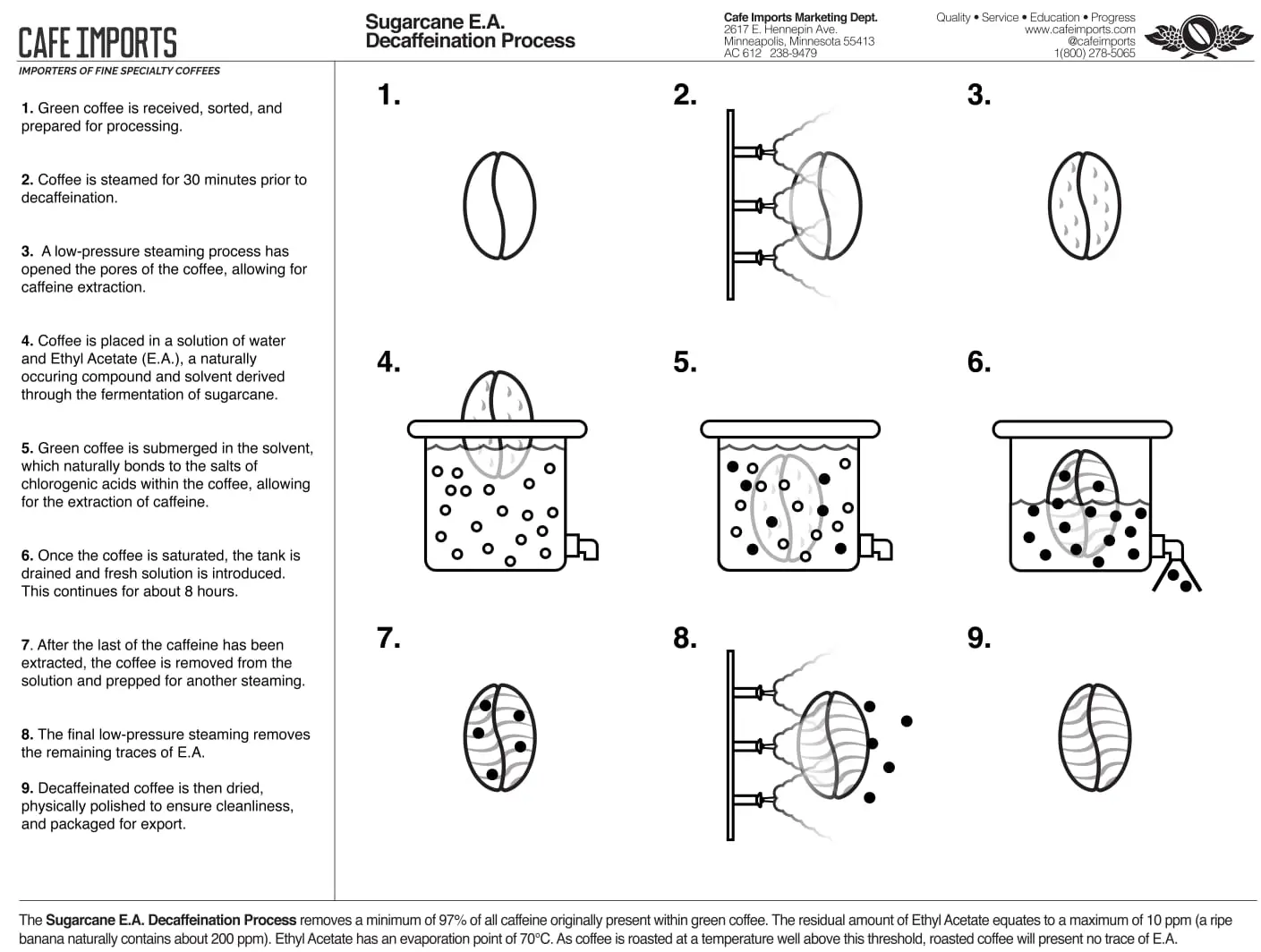
Spring water – natural origin Ethyl Acetate (EA) combined method. The latter substance is naturally present in every coffee bean (as well as in many fruits and vegetables); therefore, no addition of foreign materials takes place.
We typically prefer sugar cane profile decafs as it tends to have a richer, sweeter and more complex profile. It is also generally seen as a healthier alternative to other processes.
Washed and sun-dried. After milling, the coffee undergoes Sugar Cane Decaffeination
Natural EA is obtained from the sugarcane industry in Colombia, and is, along with spring water, the only other substance with which coffee comes into contact. This solvent of natural origin and fresh spring water are the only materials used for the caffeine extraction process.
The EA water process permits a smooth extraction of caffeine from the grain, avoiding excessive heat and pressure, thus preserving the natural structure of the coffee bean cells, allowing an excellent roasting that yields a perfect aroma and flavour.
The process is FDA approved, and the residuals of Ethyl Acetate are below 5 ppm, while international norms allow up to 20ppm. A ripe Banana contains about 20 times more EA than our decaffeinated coffee.
It is also worthwhile mentioning that due to the volatility of the Ethyl Acetate, any residual of it in coffee beans evaporates during any roasting process, leaving no trace (E.A. evaporates at 70°C, our coffee is roasted above 200°C).
Producer/Region

Compañia Cafetera La Meseta S.A cooperative with coffees from various regions (Cauca, Caldas, Risaralda, Quindío, Antioquia, Valle del Cauca, Huila, Santader, Tolima, Nariño and Cundinamarca
Harvest Period
April – July (Mitaca Harvast / Second harvast)
Nov – Dec (Main Harvest)